

From October through to January, pomegranates are piled high in UAE supermarkets and fruit markets, and they are at their sweetest and juiciest. A glass of fresh pomegranate juice is one of the real pleasures of the cooler months, but anyone who has tried to make it at home knows the catch: getting the seeds out, red splashes on every surface and, too often, a bitter aftertaste.
It does not have to be that way. With a simple seeding method and a whole fruit slow juicer, pomegranate juice at home is quick, tidy and consistently good. This guide covers choosing fruit, seeding without the mess, juicing, avoiding bitterness, a few flavour pairings and how to store what you make.
Choosing pomegranates in the UAE
Pomegranate season runs roughly from October to January, with fruit arriving from across the region and beyond. Good juicing fruit is easy to spot once you know what to look for.
- Heavy for its size. Weight means juice. Pick up two fruits of a similar size and take the heavier one.
- Firm, taut skin. The skin should feel tight and leathery. A few scuffs or a slightly angular shape are fine and are often a sign of ripe fruit.
- Deep colour inside. Skin colour varies by variety, but the arils (the juicy seeds) should be a deep ruby red. If you are buying in bulk, cut one open first.
- No soft spots. Soft or brown patches usually mean the fruit has started to spoil.
As a rough guide, plan on two large pomegranates for a good sized glass of juice.
How to seed a pomegranate without the mess
Pomegranate juice stains fabric, grout and wooden boards, so it pays to be organised. The water bowl method is the cleanest we know.
- Score, do not slice. Cut a shallow circle around the crown and lift it off. Then score the skin from top to bottom along the natural ridges, four to six times, without cutting deep into the seeds.
- Open it under water. Fill a large bowl with cold water. Hold the fruit under the surface and pull it apart into sections along the scored lines.
- Release the arils. Still under water, ease the arils away from the skin with your thumbs. They sink to the bottom while most of the white pith floats.
- Skim and drain. Scoop off the floating pith, then tip the arils into a sieve and let them drain.
If you prefer the quicker tapping method, cut the fruit in half across the middle, hold one half cut side down over a bowl and tap the skin firmly with a wooden spoon. It is faster but messier, so wear an apron and keep a cloth to hand.
Seeding is the only real prep. You can do it the night before and keep the arils covered in the fridge, ready to juice in the morning. Chilled arils also give you colder juice.
Why a whole fruit slow juicer suits pomegranate
Each aril is a small sac of juice wrapped around a hard seed, and how you extract that juice makes a big difference to the taste.
A blender smashes everything together, including the hard seeds, and you then have to strain the result through a sieve or cloth. High speed centrifugal juicers can struggle with small, loose arils and tend to leave a thick layer of foam. A slow juicer, also called a cold press juicer, uses a slowly turning auger to press the arils and separate the juice from the pulp and seeds. The result is smooth, deep red juice with very little foam.
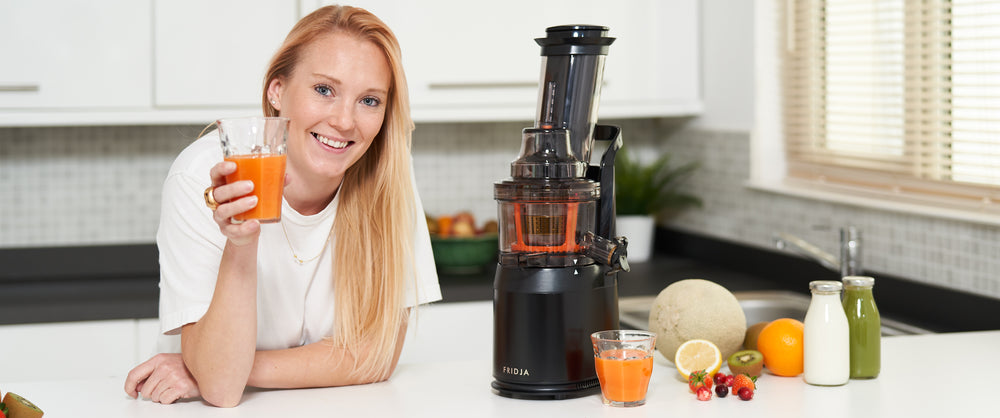
The Fridja f2500 Self Feeding Whole Fruit Juicer is built for this kind of easy, hands off juicing. It has a 135 mm wide feeding chute, so you can tip in a full bowl of arils, close the lid and let it work, with no pushing. The same machine takes whole fruit such as apples without chopping, which makes mixed juices very simple. It also has an anti drip tap, so you can stop the flow between glasses and keep the worktop clean, which matters with a juice that stains as readily as pomegranate.
Step by step: juicing pomegranates in the f2500
- Set up. Assemble the juicer, then place the juice jug under the spout and the pulp jug under the pulp outlet.
- Add the arils. Tip the drained arils into the chute. Leave behind any stray pieces of white pith.
- Close the lid and switch on. Let the juicer draw the arils down. There is no need to push or stir.
- Top up. If you are juicing several fruits, add the next bowl of arils once the chamber has emptied a little.
- Finish with something firm. An apple at the end can help push the last of the pomegranate juice through, and it softens any sharpness too.
- Serve straight away. Open the tap, pour and enjoy it while it is fresh and cold.
How to avoid bitter pomegranate juice
Bitterness almost always comes from the parts of the fruit that are not arils. A few habits keep your juice sweet and clean tasting.
- Never juice the skin. It is tempting to quarter the fruit and drop it straight in, but the skin and thick inner membrane are very bitter. Always remove the arils first.
- Remove the white pith. The papery membrane between the arils is the other main source of bitterness. The water bowl method removes most of it for you.
- Skip pale arils. Pale pink or white arils are under ripe and taste sharp. Leave them out or keep them for salads.
- Taste your fruit first. Pomegranates vary a lot. If a batch is sharp, mix it with a sweeter fruit such as apple or orange.
Flavour pairings to try
Pure pomegranate juice is lovely on its own, but it also works well with other fruit and a few flavours that feel at home in the region.
Pomegranate and apple
Two pomegranates and one whole apple. The apple adds body and rounds off the tartness. Drop it in whole, with no chopping needed.
Pomegranate and orange
Juice two pomegranates and stir in the juice of two oranges. For a quick citrus step, the Juicer Duo pairs the f2500 with the f900 Automatic Citrus Juicer.
Pomegranate, mint and lime
Juice two pomegranates with a small handful of mint leaves, then add a squeeze of lime and plenty of ice. Very refreshing on a warm afternoon.
Pomegranate and rose water
Add a few drops of rose water to a glass of pomegranate juice for a fragrant drink to serve guests. Float a few whole arils on top to finish.
Storing fresh pomegranate juice
Fresh juice tastes best on the day you make it, but a little planning lets you enjoy it for longer.
- Use glass. Pour juice into a clean glass bottle or jar, fill it close to the top to limit air, and seal it.
- Keep it cold. Store it in the fridge and drink it within about two days. Shake before serving, as it can separate.
- Freeze for later. Pour juice into ice cube trays and freeze. The cubes are great in sparkling water, lemonade or smoothies.
- Store arils too. Seeded arils keep for several days in a covered container in the fridge, and they freeze well spread in a single layer.
Cleaning up
Rinse the juicer as soon as you finish, before the juice has a chance to dry. Take it apart and rinse the strainer, auger and jugs under the tap, using a soft brush on the strainer. Wipe the worktop straight away too, especially wooden boards and light coloured grout.
Frequently asked questions
Can I put a whole pomegranate in the juicer?
No. The f2500 takes many whole fruits, such as apples, without chopping, but pomegranate skin and pith are very bitter. Remove the arils first and juice only those.
How many pomegranates do I need for one glass?
Usually two large pomegranates for a good sized glass, depending on the size and juiciness of the fruit.
Why is my pomegranate juice foamy?
Foam usually comes from high speed juicing or blending. A slow juicer produces much less, and you can skim off any that does form.
What do I do with the leftover pulp?
The pulp from pomegranate is mostly seeds and fibre, so most people add it to their compost.
When are pomegranates in season in the UAE?
Peak season runs from around October to January, when fruit is plentiful, sweet and good value.