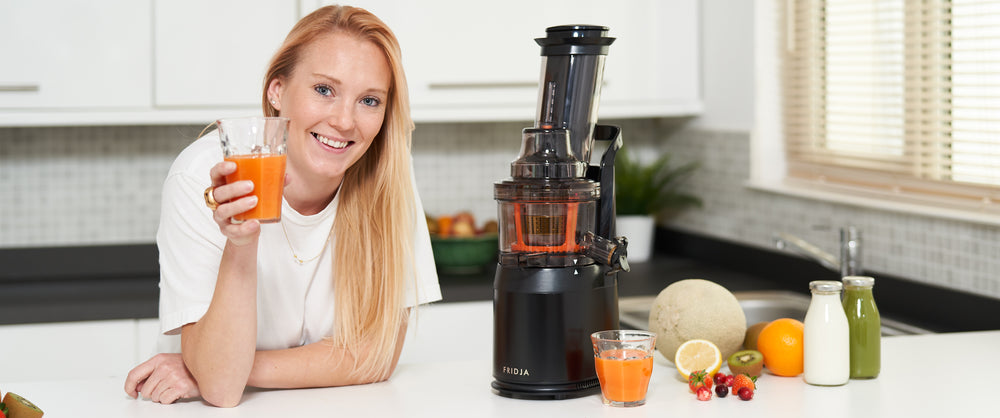


If you are shopping for a juicer, you will soon see two main types: masticating (also called cold press or slow) juicers and centrifugal (fast) juicers. They look similar on the shelf, but they work in very different ways, and that changes the juice you get, the noise in your kitchen and how much fruit you use.
Here is a plain explanation of how each type works, the real benefits of a masticating juicer and how to choose one for a UAE home.
Cold press vs centrifugal: how they work
Centrifugal juicers
A centrifugal juicer uses a flat blade spinning at several thousand revolutions per minute. The fruit is shredded and flung against a fine mesh basket, and the juice passes through. It is quick, but the high speed whips air into the juice, which creates foam, and the fast spin does not cope well with leafy greens or small, fibrous pieces like ginger.
Masticating (cold press) juicers
A masticating juicer uses a slow turning auger, a bit like a large screw, to crush and press the fruit against a strainer. "Masticating" simply means chewing. Because it turns slowly, it adds very little heat or air, so the juice has less foam and tends to separate less in the glass. The pulp comes out the other side noticeably drier, which means more of the fruit ends up as juice.
The benefits of a masticating juicer
- More juice from your fruit. The slow pressing action squeezes harder than a spinning blade, so you get drier pulp and less waste. With fruit prices in mind, that adds up over a year of regular juicing.
- Smoother juice with less foam. Less air means a cleaner looking, better tasting glass, especially with apples and pineapple.
- Keeps a little better. Cold pressed juice is best fresh, but because less air is mixed in, it usually holds its colour and taste a little longer in a sealed bottle in the fridge, often up to 48 hours.
- Handles greens, herbs and roots. Spinach, mint, ginger and turmeric all juice well, which makes a masticating juicer ideal for juice shots.
- Quieter. A slow motor is much quieter than a high speed blade, which is welcome in an apartment or if you juice early before school runs.
- More than juice. Many cold press juicers can also make nut milks and frozen fruit sorbets.
Are there any downsides?
To be fair, masticating juicers are slower, so a jug of juice takes a few minutes rather than one. They also usually cost more than basic centrifugal models. Older designs had narrow chutes, which meant lots of chopping, but newer whole fruit juicers have largely solved that. Overall, if you plan to juice more than once or twice a month, most people find a cold press model worth the extra.
Our recommendation: the f2500
The f2500 Self Feeding Whole Fruit Juicer is our top choice and a Which? Best Buy. It has a large self feeding hopper, so you can load whole apples, carrots and other fruit, close the lid and let it work through them without pushing. That means very little chopping and a lot less time standing at the worktop.
It is a cold press machine, so you get the drier pulp and smooth juice described above, and it can also make nut milk and sorbets. Try frozen mango or watermelon on a hot afternoon.
If you would like a simpler option, the f1900 Whole Fruit Juicer is also a cold press masticating juicer with a wide chute for whole fruit. For lemons, limes and oranges, pair either juicer with the f900 Automatic Citrus Juicer, which is quicker for citrus. You can browse more models in the Fridja juicer range.
Juicing in the UAE: a few practical tips
- Use seasonal fruit. Pomegranates, citrus and watermelon all juice beautifully. Mango is better blended or made into sorbet as it is quite thick.
- Chill your fruit first. In summer, juicing cold fruit from the fridge gives a more refreshing drink without watering it down with ice.
- Clean straight away. In the heat, pulp left in the strainer dries fast. Rinse the parts right after juicing and use the cleaning brush on the strainer.
- Plan for Ramadan. Juicing a jug in the afternoon and chilling it in a sealed bottle makes iftar easier.
FAQs
Is a masticating juicer the same as a cold press juicer?
Yes. Masticating, cold press and slow juicer all describe the same type: a slow auger that presses fruit rather than a fast spinning blade.
Is cold pressed juice healthier than centrifugal juice?
Both give you fresh juice. Cold pressed juice has less foam and air mixed in, and many people prefer its taste and texture, but the biggest difference for your health is simply drinking fresh fruit and vegetables regularly.
Do I have to chop fruit for a masticating juicer?
With older narrow chute models, yes. With a whole fruit juicer like the f2500, most fruit goes in whole or halved.
Can a masticating juicer handle leafy greens?
Yes. Slow juicers are much better than centrifugal models at pressing spinach, kale, mint and wheatgrass.
A masticating juicer is a good long term buy if you want smoother juice, less waste and a quieter kitchen. Explore the f2500, with free UAE delivery and Tabby instalments available on fridja.ae.