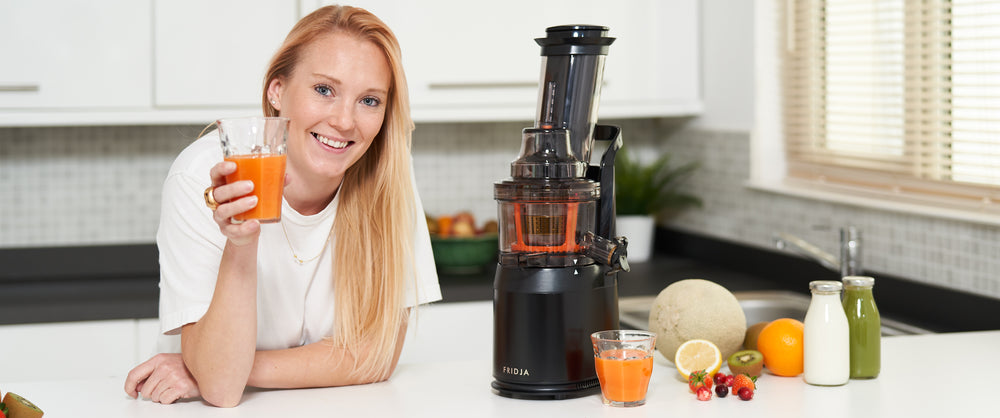


Cold pressed juice has become part of everyday life in the UAE. There is a juice bar in almost every mall, chilled bottles sit by the till in cafés, and supermarket fridges are lined with green, orange and beetroot blends. They are convenient and they taste good, but if you pick one up most days, the cost quietly adds up.
So is it cheaper to make cold pressed juice at home? For most regular juice drinkers, yes, and often by a wider margin than people expect. This guide shows you how to work out the real cost per glass, compares buying with juicing at home, and covers the things a price tag does not tell you, such as freshness, choice and time.
What you are paying for in a bottle of cold pressed juice
When you buy a bottle from a café or supermarket, the fruit is only part of the price. You are also paying for:
- Labour. Someone has washed, prepared and pressed the produce, then bottled and labelled it.
- Packaging. Bottles, labels and caps all cost money, and most of them end up in the bin.
- Chilled storage and shelf space. Refrigerated transport, refrigerated display and retail rent in a mall or on a busy street.
- Margin. The café, the brand and the retailer each need to make a profit.
None of that is unreasonable. It simply means the juice in the bottle costs a lot more than the fruit and vegetables that went into it. When you juice at home, you pay for the produce and a little electricity, and that is about it.
How to work out your cost per glass
The fairest way to compare is to work out what one glass costs you, whichever way you get it. All you need is a receipt and a measuring jug.
Shop-bought juice
Divide the price of the bottle by the number of glasses in it. A 250 ml bottle is one small glass. A one litre bottle is about four.
Juice made at home
- Note what your produce cost. Use the price per kilo from your receipt or your grocery app, and weigh what you use.
- Juice it and measure. The juice jug that comes with the Fridja f2500 Self Feeding Whole Fruit Juicer is marked with measuring units, so you can read the yield straight off the side.
- Divide. The cost of the produce divided by the number of 250 ml glasses gives your cost per glass.
As a rough guide, a kilo of juicy fruit such as apples, oranges or watermelon gives around two glasses of juice, though this varies with the fruit, how ripe it is and the season. Leafy greens and herbs give much less juice by weight, so they are best used as a smaller part of a blend.
A worked example
Here is an example with simple, round numbers. Swap in the prices from your own receipt, as fruit and vegetable prices in the UAE change with the season and from shop to shop.
- Apples at AED 8 per kilo, 1 kg used: AED 8
- Carrots at AED 4 per kilo, 500 g used: AED 2
- A thumb of ginger and half a lemon: around AED 1
That is about AED 11 of produce. If it gives you around 750 ml of juice, that is three 250 ml glasses at under AED 4 each. Now compare that with what you pay for a 250 ml bottle of apple, carrot and ginger juice at your local café or supermarket. For most people, the homemade glass costs a fraction of the bottle.
Electricity barely registers. A slow juicer turns at low speed and is only switched on for a few minutes per batch, so its running cost per glass is very small.
Do not forget the cost of the juicer
An honest comparison includes the machine. A good slow juicer is an investment, so think about it in terms of how often you would otherwise buy juice. If you pick up a bottle several times a week, the saving on each glass soon adds up and the juicer pays its way over the months that follow. If you only buy juice now and then, the case rests more on freshness and choice than on cost alone.
To find your own break even point, take the price of the juicer and divide it by the difference between a shop-bought glass and a homemade one. The answer is the number of glasses you need to make before the juicer has paid for itself.
Freshness: what the price tag does not show
Cost is only part of the story. Juice made at home is as fresh as it gets: you drink it minutes after pressing rather than days later. Many commercial cold pressed juices are made in a central kitchen and need to last on the shelf, and some are treated with high pressure processing to extend their shelf life. Check the label for the pressing date and the use by date, and you will often find several days between them.
At home you also choose exactly what goes in. No added sugar, no added water, no concentrate, and as much or as little ginger as you like.
Waste and packaging
A daily bottled juice means a lot of bottles. Over a year, that is hundreds of bottles heading for the recycling bin or landfill. Juicing at home into a reusable glass bottle cuts that down to almost nothing. The pulp can go into compost, or into muffins, soups and veggie burgers if you like to cook.
Ways to keep your cost per glass down
- Buy what is in season. Citrus and pomegranates are plentiful from autumn into winter, and watermelon is at its best in the warmer months.
- Buy loose and in bulk. Fruit and vegetable markets often have better prices on larger quantities than pre-packed supermarket bags.
- Use a good value base. Apples, carrots, cucumber and watermelon give plenty of juice for the money. Add pricier fruit such as berries or pineapple in smaller amounts for flavour.
- Waste less in prep. With a whole fruit juicer, apples go in whole, so less is lost to peeling and coring.
- Batch juice. Make two days' worth at once and store it in sealed glass bottles in the fridge.
But is it worth the time?
This is usually the real question. Buying a bottle takes a minute. Juicing at home used to mean chopping, feeding the chute piece by piece and a lot of scrubbing afterwards.
A self feeding whole fruit juicer changes that. With the f2500 you drop in whole fruit, close the lid and carry on with your morning, with no chopping and no pushing. The 135 mm wide feeding chute takes whole apples and large pieces of fruit, and the anti drip tap lets you stop the flow between glasses and keeps the worktop clean. Rinse the parts straight after use and the clean up is quick. Once it becomes part of your routine, it is often faster than queueing at a juice bar.
It does more than juice, too. The f2500 also makes nut milk, sorbets and fruit ice creams, so you get more use from one machine. If you love fresh orange juice as well, the Juicer Duo pairs the f2500 with the f900 Automatic Citrus Juicer.
Quick comparison
- Cost per glass: a shop-bought bottle covers labour, packaging and margin; at home you pay for the produce and a little electricity.
- Freshness: a shop-bought bottle may be several days old; juice made at home is minutes old.
- Ingredients: fixed recipes in the shop; your own choice at home.
- Convenience: buying wins when you are out and about; juicing at home wins if you drink juice most days.
- Packaging: one bottle per drink, or one reusable glass bottle.
Frequently asked questions
Is it cheaper to make cold pressed juice at home in the UAE?
For most people who drink juice regularly, yes. At home you pay mainly for the produce, while a shop-bought bottle also covers labour, packaging, chilled storage and retail margin.
How much juice do I get from a kilo of fruit?
It depends on the fruit and how ripe it is, but juicy fruit such as apples, oranges and watermelon gives roughly two 250 ml glasses per kilo. Leafy greens give less.
How long does homemade cold pressed juice last?
It tastes best on the day you make it. In a sealed glass bottle in the fridge, most juices are good for about two days. Shake before drinking, as fresh juice naturally separates.
Do I need to chop fruit for the f2500?
No. It is a self feeding whole fruit juicer, so you can drop in whole fruit such as apples, close the lid and let it work. Fruit with thick or bitter skin, such as oranges, pineapple and pomegranate, should still be peeled first.
Where can I buy the f2500 in the UAE?
The f2500 is available here on fridja.ae, with free delivery across the UAE. Orders placed before 1pm are dispatched the same day.